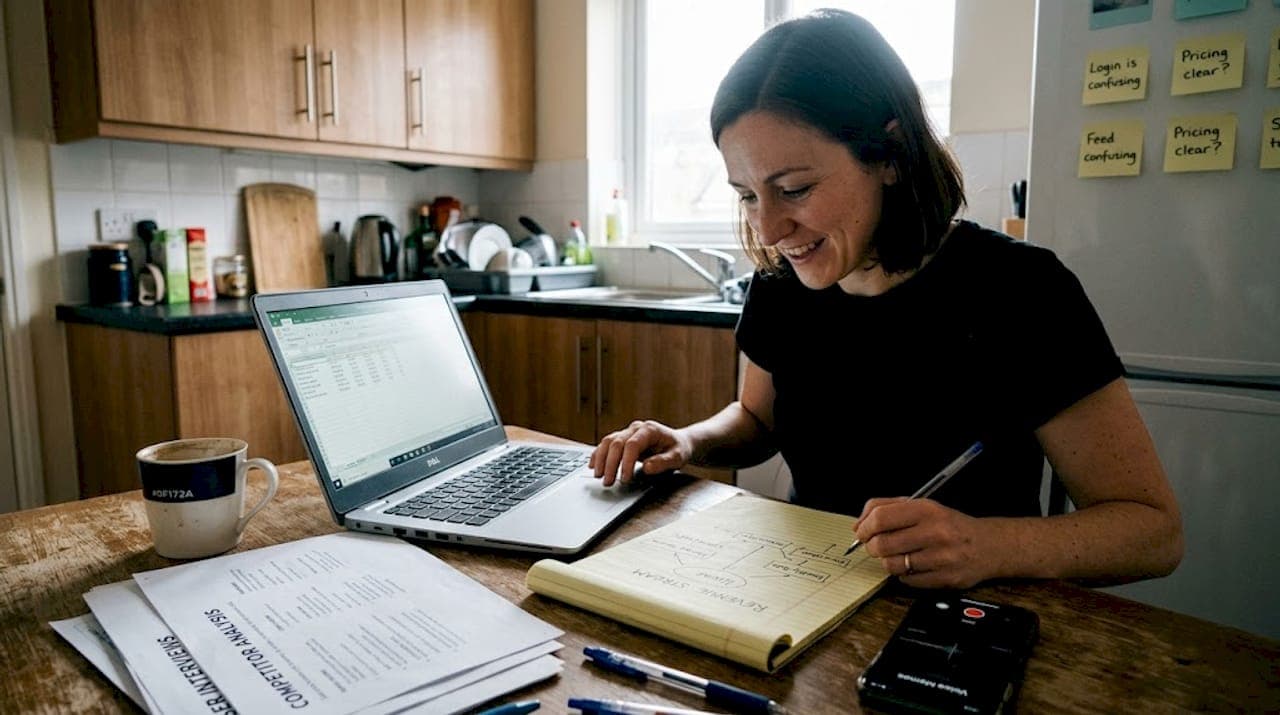
Most great business ideas never make it past the notebook stage. Not because they're bad ideas, but because the path from concept to launch feels impossibly long, technical, and expensive. If you've been sitting on an idea, watching the months slip by while you wait for the "right moment" or the "right skills," this guide is written for you. I'll walk you through a practical, step-by-step approach to launching your business quickly, even if you have zero coding experience, a modest budget, and more questions than answers right now.
Table of Contents
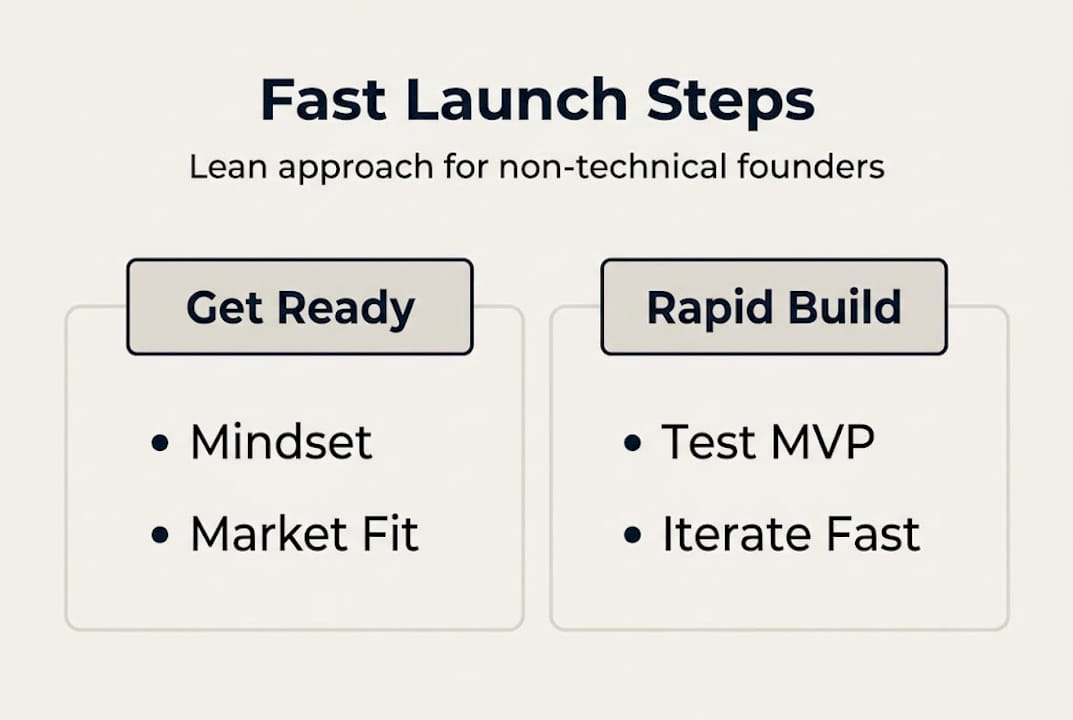
- What you need before you start: Mindset, market fit, and essentials
- Step-by-step process: From idea to launch in record time
- Leverage no-code, AI and tech shortcuts: Build your MVP even with zero coding skills
- Avoid common mistakes and launch with confidence
- What most guides miss: Fast launches work, but trade-offs matter
- Ready to launch? How Kalynto Ventures can help
- Frequently asked questions
Key Takeaways
| Point | Details |
|---|---|
| Validate before launch | Always test your idea with real users to avoid building something nobody wants. |
| Use no-code and AI tools | You can launch an MVP in days without coding skills or a developer team. |
| Prioritise speed over perfection | Get your product into the market quickly, then refine based on real feedback. |
| Protect yourself legally | Choose the right business structure early to reduce risks and liabilities. |
| Learn, adapt, and iterate | Regularly gather feedback and evolve as you grow to improve your chances of success. |
What you need before you start: Mindset, market fit, and essentials
With the overall approach in mind, let's break down what you need in place before taking any big steps.
The single biggest mistake I see aspiring founders make is waiting. Waiting for more money, more time, more confidence, or a perfectly formed plan. The truth is, none of those things arrive on their own. What actually moves the needle is a bias towards action, even when conditions feel imperfect. That shift in mindset is your first and most important asset.
Before you spend a penny or build anything, validate your idea. This means checking whether real people actually want what you're planning to offer. It sounds obvious, yet 93% of start-ups fail, with 42% citing no market need as the cause. That's not a small number. It means nearly half of all failed ventures could have been saved by asking the right questions earlier. Use a business idea check to pressure-test your concept before committing serious resources.
Here's what you genuinely need before launching:
- A clear, specific idea — not just a vague category, but a defined problem you're solving for a defined group of people
- A basic plan — even a one-page outline of your offer, audience, and revenue model is enough to start
- Minimal funds — you don't need tens of thousands; many businesses launch on a few hundred pounds
- A learning mindset — you will get things wrong, and that's not failure, it's data
On the legal side, avoid setting up as a sole trader if you can help it. Sole proprietorship offers no separation between your personal finances and your business liabilities. A limited company or LLC structure protects you personally if things go sideways. It's a small step that saves enormous headaches later.
Finally, think in terms of a minimum viable product (MVP). An MVP is the simplest version of your offer that still delivers real value to a customer. It's not a rough draft or a half-baked product. It's a focused, functional version that lets you gather feedback without overbuilding. The Forbes start-up guide puts it well: build for your first ten customers, not your first ten thousand.
"The goal of an MVP is not to build the smallest thing possible. It's to learn the most with the least effort."
Pro Tip: Talk to at least five potential customers before building anything. Their exact words will shape your product, your marketing, and your pitch better than any market research report.
Step-by-step process: From idea to launch in record time
Once you've got your essentials lined up, here's a practical walk-through of each stage.
Launching a business used to mean months of planning, legal wrangling, and technical setup before a single customer ever saw your product. That model still exists, but it's no longer the only one. Lean and no-code methods compress the timeline dramatically without cutting corners on what actually matters.
Here's the core sequence, distilled to what's essential:
- Validate your idea — conduct quick market research, run surveys, or speak directly to potential customers
- Write a one-page business plan — define your offer, target audience, pricing, and basic financials
- Choose your legal structure — register as a limited company or LLC rather than a sole trader for liability protection
- Register your business — this can be done in a single afternoon in the UK via Companies House
- Build your MVP — use no-code tools to create a working version of your product or service
- Secure basic funding — bootstrap, pre-sell, or explore small grants before seeking investors
- Create your online presence — a clean website, social profiles, and a way to collect payments
- Launch and gather feedback — get your offer in front of real people and iterate based on what you learn
These core launch steps are well established, but the speed at which you move through them is entirely within your control. See a full step-by-step example of how this plays out in practice.
| Stage | Traditional timeline | Fast-launch timeline |
|---|---|---|
| Idea validation | 4 to 8 weeks | 3 to 5 days |
| Business plan | 2 to 4 weeks | 1 to 2 days |
| Legal setup | 2 to 6 weeks | 1 to 3 days |
| MVP build | 3 to 9 months | 1 to 21 days |
| Online presence | 4 to 8 weeks | 1 to 5 days |
| First customer | 6 to 18 months | 2 to 6 weeks |
The difference isn't magic. It's method. Lean founders skip the unnecessary and focus ruthlessly on what moves them closer to a paying customer.
Leverage no-code, AI and tech shortcuts: Build your MVP even with zero coding skills
The latest technology means you don't need to code or hire expensive developers. Here's how to build fast instead.

Five years ago, building a digital product without a developer was genuinely difficult. Today, it's not only possible, it's often faster and cheaper than the traditional route. No-code and AI-powered platforms have changed the game entirely for non-technical founders.
No-code and AI builders can reduce traditional development time by 70 to 90%, compressing what once took four to nine months into as little as 21 days or even 24 hours. That's not a typo. A working MVP, live and ready for customer feedback, in a single day.
Here's a quick look at how popular tools compare:
| Tool | Best for | Approximate build time | Cost to start |
|---|---|---|---|
| Bubble | Web apps and marketplaces | 1 to 3 weeks | Free tier available |
| Webflow | Websites and landing pages | 1 to 5 days | From £14/month |
| Glide | Mobile apps from spreadsheets | 1 to 3 days | Free tier available |
| Typedream | Simple product pages | Hours | Free tier available |
| AI builders (e.g. SerenitiesAI) | Rapid prototyping | Under 24 hours | Varies |
The practical process looks like this:
- Pick your problem — be specific about the pain point you're solving
- Sketch a mockup — even a hand-drawn wireframe helps clarify your thinking
- Build in your chosen tool — drag, drop, configure, and connect
- Test with real users — share early access with five to ten people and watch how they use it
Pro Tip: Don't aim for beautiful on your first build. Aim for functional. A tool that solves the problem, even imperfectly, will teach you more than a polished product that took six months to finish. You can validate with AI tools to sharpen your concept before you build a single screen.
Iteration is your friend here. Each round of feedback tightens your product and reduces wasted effort. The founders who move fastest are the ones who treat their MVP as a conversation with the market, not a finished statement.
Avoid common mistakes and launch with confidence
Even with a great toolkit and plan, there are traps you must sidestep.
The pursuit of perfection is one of the most common reasons start-ups stall. Founders spend months refining features nobody asked for, polishing copy that nobody will read, and delaying launch until everything feels "ready." It never does. The MVP mindset exists precisely to break this cycle.
Here are the most damaging mistakes I see, and how to avoid them:
- Skipping legal structure — operating as a sole trader exposes your personal assets; sort your company registration early
- Over-funding before validation — raising money before proving demand creates pressure and distorts your priorities
- Building alone without feedback — isolation breeds assumptions; get your product in front of people as soon as humanly possible
- Scaling too early — hiring, advertising, and expanding before you have a repeatable sales process burns cash fast
- Ignoring the numbers — even a basic spreadsheet tracking income and outgoings will save you from nasty surprises
Self-doubt is also real, and it's worth naming it directly. Most founders experience it. The research is clear: business transformations succeed 55% more often when founders combine creativity with discipline and several other supporting factors. Small wins matter enormously here. Each completed task, each positive customer response, each sale builds the confidence that keeps you moving.
"You don't need to feel ready. You need to feel willing."
Pro Tip: Set a hard launch date and work backwards from it. Deadlines create focus. Without one, preparation expands to fill all available time and launch never arrives.
Reading about a real-life founder experience can also help normalise the uncertainty. Every founder you admire has sat exactly where you're sitting now.
What most guides miss: Fast launches work, but trade-offs matter
Having learned the mechanics and pitfalls, consider this from direct experience. Here's how real-world launches actually succeed.
Most start-up guides are written as if slow, meticulous planning is the responsible choice and speed is somehow reckless. I've found the opposite to be true. Learning by launching beats theorising every single time. The market will tell you things in a week that six months of planning never could.
That said, speed has limits. When you're approaching serious investment, complex regulation, or meaningful scale, the shortcuts that served you at launch can become liabilities. A business built on informal systems and verbal agreements works fine at ten customers. It starts to crack at a hundred.
The approach that actually works, in my experience, is to launch lean and layer structure as you grow. Get your first customers, gather your first data, then build the compliance, the contracts, and the formal systems on top of a foundation that's already been tested by reality.
Failure is part of this. Not a sign that you're doing it wrong, but a signal that something needs adjusting. Keep experimentation and feedback at the centre of everything you do, especially in the early months. The founder insights behind Kalynto were shaped by exactly this kind of iterative learning.
Ready to launch? How Kalynto Ventures can help
If you want more than just guidance and are ready for action, here's where to get help tailored to fast business launches.
At Kalynto, we work with non-technical founders who have strong ideas and want to move quickly without getting buried in complexity. We take your concept and build it into a fully operational business, including website, brand identity, backend systems, and automation, within 7 to 10 days.
Whether you're still shaping your concept or ready to build, you can validate your business idea right now and get clarity on whether your idea is ready to launch. If you want to see the kinds of businesses we bring to life, take a look at the businesses we build and find the model that fits your vision. The gap between idea and income doesn't have to be as wide as it feels.
Frequently asked questions
How quickly can I realistically launch a business using these methods?
With no-code tools and AI, many founders launch working MVPs in as little as 24 hours to 21 days, compared to the traditional four to nine months of development time.
Do I need to register a company before building my MVP?
It's wise to validate your idea first, but once you're ready to proceed, avoid sole proprietorship and register a limited company or LLC to protect your personal assets from business liabilities.
What if I have zero coding or technical background?
No-code and AI platforms are built specifically for non-technical founders, allowing you to build without coding using drag-and-drop tools that require no programming knowledge whatsoever.
How can I be sure my business idea is good?
Validate with real customer conversations and market research before building anything, since 42% of start-ups fail specifically because there was no genuine market need for what they built.